When talking about healthy eating, the term ‘macronutrient’ is commonly heard. Understanding what a macronutrient is and how they play key roles in the daily diet can be extremely beneficial in achieving overall optimal health and personal fitness goals. Macronutrients are the nutrients our bodies need in larger quantities that can be obtained through our daily diets. There are three main types of macronutrients being carbohydrates, proteins, and fats.
CARBOHYDRATES
Carbohydrates are our body’s primary source of energy. Our bodies break down carbohydrates into glucose or blood sugar, becoming the main source of energy in our bodies. After being broken down, it will be used either as an immediate source of energy or stored in the liver and muscles for later usage. Carbohydrates should make up about 45 – 65% of your total daily calories and 1 gram of Carbohydrates offers 4 calories.
THREE MAIN TYPES OF CARBOHYDRATES:
Sugar – the most basic form of carbohydrates. Can be naturally occurring (fruits, vegetables, milk) or added to food (candy, soda, processed food)
Starches – These are complex carbohydrates that the body needs to break down into smaller sugars in order to be used for energy. These include pastas, breads, curtains, and certain vegetables such as potatoes and corn.
Fiber – Fiber is also a complex carbohydrate that is nondigestable and needs to be broken down. Fiber can help to lower cholesterol, prevent constipation, and promote feelings of fullness. It is typically found in fruits, vegetables, nuts, and whole grains.
SOURCES OF CARBOHYDRATES:
Whole grain bread
Rice
Cereals
Milk
Yogurt
Apples
Bananas
Berries
PROTEINS
Every cell in our body contains protein which makes it the building blocks of life. Proteins are made up of amino acids that help to build and repair muscles, make and repair cells, support immune functions, and are important for growth and development. During digestion, proteins are then broken down into their amino acid profiles. Amino acids can be made in the body or need to be obtained through the diet.
Essential Amino Acids
Cannot be made in the body and must be obtained through the diet
There are 9 essential amino acids
A ‘complete’ or ‘high quality’ protein source will contain all 9 essential amino acids
Nonessential Amino Acids
Are made by the body and do not need to be obtained by food
Typically protein should make up 10 – 35% of your overall calories and 1 gram of protein offers 4 calories. There are great sources of both plant based and animal based dietary protein sources.
PLANT BASED PROTEIN OPTIONS:
Beans and legumes
Nuts and seeds
Quinoa
Tofu
Broccoli
Edamame
ANIMAL BASED PROTEIN OPTIONS:
Beef
Chicken
Pork
Seafood
Eggs
Dairy
FATS
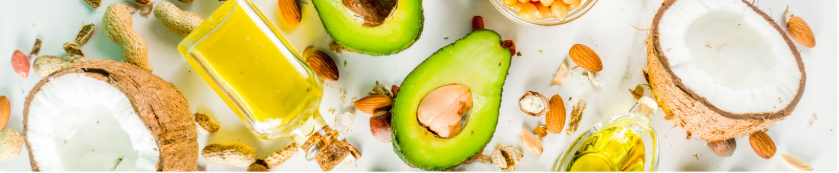
Fats are essential for hormone production, energy storage, and absorption of fat soluble vitamins (vitamins A, D E, and K). They should make up around 20 – 35% of your daily calories and offer 9 calories per 1 gram. Fats are commonly seen as ‘bad’ or ‘unhealthy’, however, this is not completely true. There are good fats, such as omega 3 fatty acids, that offer incredible benefits and are crucial for overall good health.
TYPES OF FAT:
Unsaturated Fat – Healthy fats that are typically liquid at room temperature. Can help to lower LDL cholesterol (“bad”) and raise HDL cholesterol (“Good”). It is recommended to prioritize unsaturated fat sources in the diet.
Olive oil, Avocados, Nuts, Fatty fish (Omega 3), Vegetable oils,
Saturated Fat – Are typically found in animal food sources and some plant based sources of fat. This will raise LDL cholesterol (“bad”) and when eaten often and in large quantities can increase risks of heart disease. Saturated fat sources are recommended to be eaten in moderation.
Read meats, Butter, Coconut oil, Cheese, Palm oil
Trans Fat – When unsaturated fats are hydrogenated to create a more ‘shelf stable’ product. Can raise LDL cholesterol (“bad”) and lower HDL cholesterol (“Good”). It is recommended to avoid the consumption of trans fats as much as possible.